
If you could reclaim the thousands of hours spent on repetitive shaving or the discomfort of monthly waxing, what would you do with that newfound freedom? It’s a question many of our clients ask whilst feeling the weight of a grooming routine that never seems to end. You likely feel a sense of hesitation because the beauty industry often blurs the lines between marketing claims and medical reality. It’s completely natural to feel cautious about the investment when you aren’t certain how long does laser hair removal last or if the results will truly stand the test of time.
We’re here to provide the clinical clarity you deserve by exploring the biological synchronisation required for permanent hair reduction. You’ll learn how 2026’s mandatory UK licensing and the advent of AI-enhanced, multi-wavelength technology are shifting the standard of care. We’ll examine the science of hair growth cycles and explain why a tailored maintenance schedule is essential for preserving your smooth, radiant skin. This is your guide to understanding how medical-grade precision can finally replace the frustration of temporary fixes with lasting, effortless confidence.
Key Takeaways
- Understand the distinction between total removal and permanent reduction to ensure your expectations align with clinical reality.
- Discover exactly how long does laser hair removal last by exploring the necessity of annual maintenance sessions to keep your skin perfectly smooth.
- Learn why the Anagen growth phase is the only window for effective follicle destruction and why multiple sessions are vital for success.
- Identify how hormonal shifts and skin contrast influence your personal results, allowing for a more bespoke and effective treatment plan.
- Recognise the superior longevity offered by medical-grade technology compared to standard salon systems to protect your long-term investment.
How Long Does Laser Hair Removal Last? Defining Permanent Reduction
When you begin researching clinical hair removal, you’ll often encounter the term “permanent” used with a variety of caveats. It’s the most frequent query we receive from new clients; they simply want to know how long does laser hair removal last before they commit to a treatment plan. To understand the timeline, we must first look at the science of the hair follicle. The process relies on selective photothermolysis, where light energy is converted into heat to target the melanin in your hair. If the follicle is completely destroyed during this process, it cannot produce another hair. However, if the follicle is only damaged, it may eventually recover, leading to the growth of much finer, lighter, and slower-growing strands.
The distinction between total removal and reduction is more than just semantics; it’s about setting a transparent foundation for your skin journey. Whilst some areas may see a complete lack of regrowth for many years, the human body is a dynamic biological system capable of change. To better understand this concept, watch this helpful video:
Permanent Removal vs. Permanent Reduction
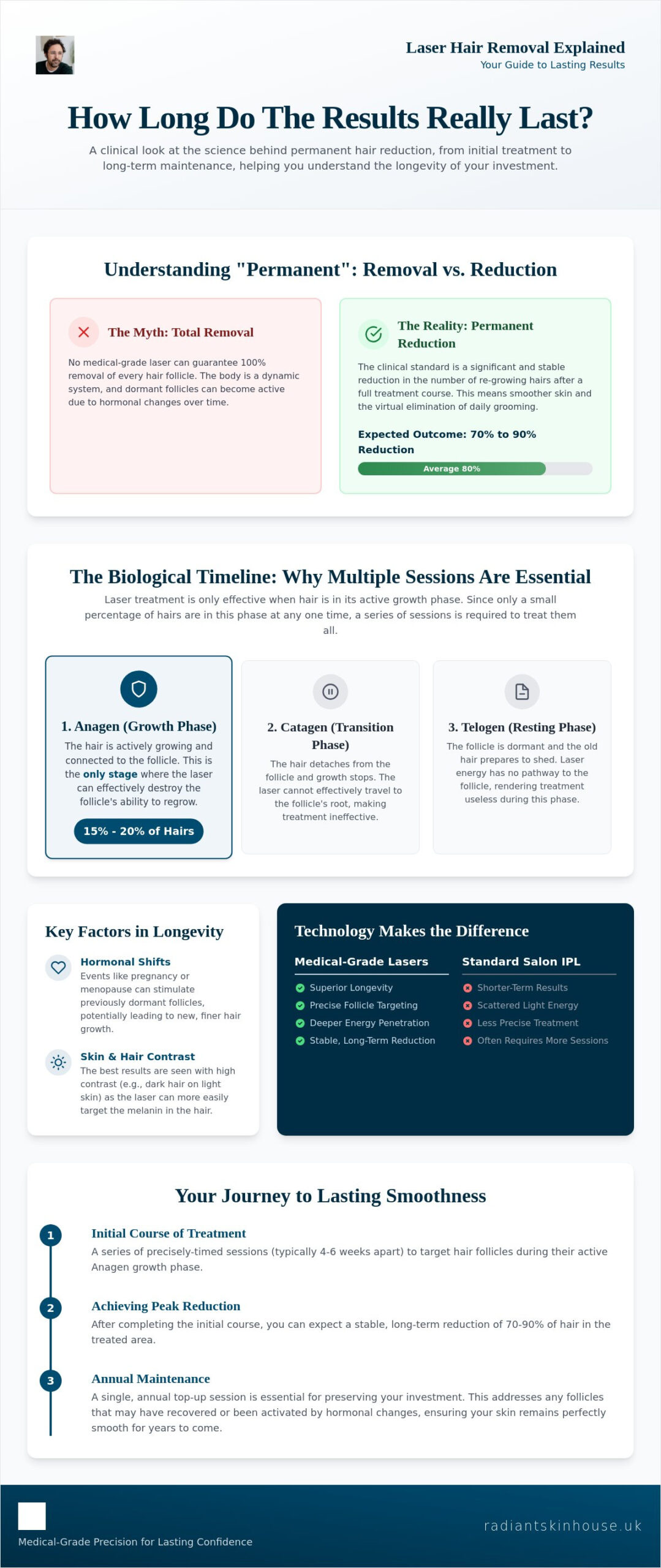
No medical-grade laser can honestly guarantee the 100% removal of every single hair follicle across your entire body. The industry standard, and what you should expect from a high-end clinic, is a stable reduction of approximately 70% to 90%. This range represents a significant lifestyle shift, virtually eliminating the need for daily maintenance. It’s also vital to recognise that “dormant” follicles, which aren’t active during your initial course of treatment, can be triggered later in life. Significant hormonal shifts, such as pregnancy or menopause, can occasionally stimulate these previously quiet follicles to begin producing hair again, though these new hairs are usually much easier to manage.
The 2026 Standard for “Long-Lasting” Results
As we move through 2026, the technology at our disposal has become incredibly sophisticated. Modern Alexandrite and Nd:YAG lasers provide much more stable results than the older IPL systems often found in high-street salons. These advanced wavelengths allow for deeper, more precise targeting of the hair bulb. Permanent hair reduction is a long-term, stable decrease in the number of hairs re-growing after a treatment regime. To ensure your results remain radiant and consistent, a bespoke consultation is the first step in mapping out your specific longevity. By assessing your hair density and skin tone with expert precision, we can tailor the laser’s pulse to match your unique biology, ensuring that when you ask how long does laser hair removal last, the answer is measured in years of smooth, effortless skin.
The Biological Timeline: Why Multiple Sessions Are Mandatory
Understanding the biological rhythm of your body is the key to unlocking the full potential of your treatment. Many clients initially feel surprised to learn that a single session, regardless of the laser’s power, cannot achieve the results they desire. This necessity for a series of appointments isn’t a limitation of the technology; it’s a requirement of human physiology. If you’ve ever wondered how long does laser hair removal last, the answer depends almost entirely on our ability to synchronise your sessions with your hair’s natural growth cycle.
Understanding the Anagen (Growth) Phase
Your hair follicles don’t all behave in the same way at the same time. At any given moment, only about 15% to 20% of your hair is in the Anagen phase. This is the active growth stage where the hair shaft is firmly attached to the bulb and the underlying germ cells. During a treatment, the laser energy is absorbed by the pigment in the hair and travels down like a conductor to destroy these cells. If the hair is successfully targeted during this specific window, the follicle’s ability to regenerate is permanently compromised. Because such a small percentage of hair is active at once, we must return to the area several times over several months to ensure we catch every follicle in its vulnerable state. This meticulous process is what allows many individuals to remain hair free for months or even years after their initial course is complete.
Why Consistency Dictates Longevity
The remaining hairs on your body are either in the Catagen (transition) or Telogen (resting) phases. In these stages, the hair has already begun to detach from the follicle bulb, meaning the laser’s heat cannot reach the germ cells effectively. This is why the 4–8 week interval is often referred to as the “golden rule” of clinical hair removal. By spacing sessions according to the specific area being treated, we aim to intercept the next wave of follicles as they enter the Anagen phase.
Skipping a session or extending the gap too far can lead to a “re-set” effect. When intervals are missed, you may experience patchy regrowth as follicles that should have been treated are allowed to move back into a resting phase. To prevent this, our experts organise your treatment plan with mathematical precision, ensuring maximum synchronisation between the laser and your biology. Maintaining this momentum is the most reliable way to ensure your investment results in the smooth, radiant finish you expect. If you’re ready to move beyond the cycle of temporary fixes, a tailored clinical approach can provide the clarity and results you’ve been searching for.
Factors That Influence How Long Your Results Last
Whilst the technology we use is incredibly advanced, your unique biology plays a pivotal role in determining the final outcome of your treatment. When considering how long does laser hair removal last, we must look beyond the machine and examine the specific characteristics of your hair and the internal environment of your body. No two clients share the exact same physiological map, which is why a bespoke approach is the only way to ensure clinical longevity.
Hair Colour and Skin Tone Nuances
The core principle of effective laser treatment is contrast. The laser targets melanin, the pigment that gives hair its colour. Darker, coarser hair typically sees the most stable results because the follicle absorbs the light energy with exceptional efficiency. For those with deeper complexions, laser hair removal for dark skin requires specific wavelengths, such as the Nd:YAG, to bypass the surface pigment safely whilst still delivering enough heat to the bulb. Whilst older systems often struggled with lighter hair, 2026’s multi-wavelength technology is successfully bridging this gap. However, it’s vital to recognise that very fair, red, or grey hair lacks the melanin required for the laser to “see” the target, which can lead to less predictable durations.
Hormonal Triggers and Regrowth
This is a critical area where many generic guides fail to provide clarity. Your hormones act as the master switch for hair production. If you are managing conditions like PCOS or moving through significant life stages such as pregnancy or menopause, fluctuations in androgen levels can stimulate “sleeping” follicles into active growth. This doesn’t mean your previous sessions were ineffective; it simply means your body has activated new hair production sites that weren’t present during your initial course. Understanding how long laser hair removal lasts in these scenarios requires a more nuanced perspective. Facial areas amongst female clients are particularly prone to hormonal influence, often necessitating more frequent maintenance to keep the skin perfectly smooth.
Your previous grooming habits also leave a lasting footprint on follicle health. If you’ve spent years waxing or epilating, you may have inadvertently distorted some follicles, which can occasionally affect how the laser energy travels down the shaft. Shaving is the only recommended method whilst undergoing a clinical course because it leaves the hair bulb intact for the laser to target. Different body areas also follow distinct timelines. Leg hair, for example, has a much longer resting phase than facial hair, which often results in a more stable, long-term reduction after your sessions are complete. By acknowledging these variables, we can move away from “one-size-fits-all” promises and toward a realistic, expertly managed plan for your skin.
Maintenance and Aftercare: Preserving Your Investment
Achieving clinical hair reduction is a significant milestone, but the longevity of your results depends heavily on how you nurture your skin in the months following your final session. If you want to ensure the answer to how long does laser hair removal last is measured in years rather than months, you must adopt a proactive preservation mindset. Protecting your investment requires a blend of professional maintenance and disciplined home care, ensuring those dormant follicles remain inactive for as long as possible. When evaluating the full picture, understanding the laser hair removal cost in London and its long-term value can help you appreciate why a clinical approach far outpaces the cumulative expense of temporary methods.
The Annual Maintenance Framework
Essential Aftercare for Lasting Smoothness
Post-treatment protocols are designed to protect the delicate skin whilst it heals and to prevent pigment issues. Applying a high-quality SPF 50 daily is non-negotiable. Sun exposure can stimulate melanin production and complicate your long-term outcome. You might also wonder, does laser hair removal hurt more if aftercare is neglected? In truth, skin that is properly hydrated and shielded from environmental stressors responds far more comfortably to future sessions. We advise avoiding intense heat like saunas or steam rooms for at least 48 hours to ensure the follicle destruction remains undisturbed.
Your behaviour between sessions is equally vital. To ensure the follicles are ready for future treatment, you must adhere to a few simple home care rules:
- Never pluck or wax: This removes the hair bulb entirely and leaves the laser with no target.
- Shave only: Shaving is the only acceptable method as it keeps the root intact.
- Avoid sunbeds: A fresh tan can pause your treatment journey and affect safety.
By following these methodical steps, you maintain the quiet luxury of smooth skin without the constant worry of regrowth. If you’re ready to secure your long-term results, we invite you to book your bespoke maintenance session with our expert team today.
The Radiant Skin House Difference: Medical-Grade Longevity in North London
At The Radiant Skin House, we believe that clinical excellence should always be paired with a warm, personal touch. While many high-street establishments offer hair removal, the quality of the technology and the expertise of the practitioner vary significantly. If you’re questioning how long does laser hair removal last, the answer is often found in the calibre of the equipment used. We prioritise medical-grade systems because they offer a level of precision and power that standard salon alternatives simply cannot match, ensuring your results are as enduring as they are radiant.
Medical-Grade vs. Salon-Grade IPL
It’s a common misconception that Intense Pulsed Light (IPL) and medical-grade lasers are the same. In reality, IPL uses a broad spectrum of light that often only “stuns” the hair follicle; this leads to results that may fade in just a few months. Our medical-grade lasers target the root with a concentrated beam of energy designed to destroy the follicle entirely. This distinction is why our clients enjoy results that last for years rather than weeks. By choosing the highest calibre of technology available in 2026, we ensure your journey toward smooth skin is both efficient and permanent in its reduction.
The success of your treatment also rests on the expertise of your practitioner. We don’t believe in a “one-size-fits-all” setting; instead, we use bespoke treatment mapping to tailor the laser pulse to your specific hair depth and skin type. Choosing the correct energy level is a delicate balance. It must be powerful enough to be effective whilst remaining gentle on the surrounding tissue. This methodical approach is what defines our reputation across North London, providing consistent, high-end care from our welcoming centres in Finchley and Hampstead.
Your Journey to Lasting Smoothness
Transparency is the cornerstone of our consultation process. From your first visit, we provide a clear, honest assessment of what you can expect based on your unique biology. We meticulously track your progress through every session to ensure we capture each hair cycle at its most vulnerable point. Whether you’re seeking a full-body transformation or a specific facial laser hair reduction plan, our goal is to provide a result that feels natural and effortless.
When you understand how long does laser hair removal last at a medical-grade level, the decision to invest in your confidence becomes clear. We invite you to experience a more sophisticated approach to grooming, where your long-term comfort and skin health are our primary focus. Our dedicated team is here to act as your partner, guiding you away from the cycle of temporary fixes and toward a future of lasting, clinical smoothness.
Securing Your Future of Effortless, Radiant Skin
Transitioning from temporary methods to a clinical solution is a journey of precision and transparency. By aligning medical-grade laser technology with your unique biological hair cycles, you can achieve a level of smoothness that traditional waxing simply cannot match. The clinical reality of how long does laser hair removal last depends on catching follicles in their active state and committing to a structured maintenance framework. These elements work together to ensure your skin remains clear and vibrant for years to come.
Our expert practitioners in North London are dedicated to providing tailored treatment plans for all skin tones, ensuring your investment is protected by the highest standards of safety and efficacy. Whether you are visiting us in Finchley or Hampstead, our goal is to provide you with the calm confidence that comes from expert care. We invite you to Book Your Bespoke Laser Consultation at Radiant Skin House and take the first step toward a more refined, effortless grooming routine. Your journey to lasting, natural results begins with a single, thoughtful conversation.
Frequently Asked Questions
Is laser hair removal really permanent?
Technically, it’s classified as permanent hair reduction rather than 100% removal. Whilst the laser destroys the majority of active follicles, your body can occasionally develop new ones over time. Most clients experience a 70% to 90% stable reduction, which effectively eliminates the need for daily shaving. It’s a long-term solution that significantly alters your grooming lifestyle, providing a radiant finish that lasts for years.
How many sessions do I need before the results are long-lasting?
Most clients require between 6 and 8 sessions to achieve a result that stands the test of time. This number is necessary because the laser only targets hair in the active growth phase, and your follicles operate on different cycles. By completing a full course, you ensure that every follicle has been treated at its most vulnerable point. This meticulous approach is the secret to understanding how long does laser hair removal last.
What happens if I stop laser hair removal after only 3 sessions?
Stopping after only 3 sessions will likely result in patchy regrowth and a lack of clinical longevity. Whilst you’ll see an initial reduction in hair density, many follicles remain untreated in their resting phases. Without completing the recommended course, these follicles will eventually enter the growth stage. This causes hair to return prematurely and compromises the total duration of your smooth results, making the initial investment less effective.
Does hair grow back after 10 years following laser treatment?
Whilst results are exceptionally long-lasting, it’s possible to see some fine regrowth after a decade. This is typically due to new follicles being activated by natural biological changes rather than the failure of the original treatment. A single maintenance session every year or two is usually all that’s required to manage these stray hairs. This ensures the area remains perfectly smooth and maintains the expert precision of your original results.
Can hormones cause hair to grow back after laser hair removal?
Yes, significant hormonal shifts can stimulate “sleeping” follicles to begin producing new hair. Life events such as pregnancy, menopause, or managing conditions like PCOS can trigger androgen levels that activate these previously dormant sites. This isn’t a reversal of your previous progress; it’s simply your body’s response to internal changes. We can manage these new hairs with bespoke top-up sessions, ensuring your skin stays radiant despite internal shifts.
Why do I need top-up sessions if the treatment is successful?
Top-up sessions act as a preservation strategy for your smooth skin. Even with a successful initial course, the body is a dynamic system that can occasionally produce new, fine hairs over time. An annual visit ensures that any fresh growth is addressed immediately, maintaining the high-end results you’ve invested in. This proactive approach is the most reliable way to extend how long does laser hair removal last whilst keeping grooming time to a minimum.
Will the hair that grows back be different from before?
Any hair that does return after treatment is almost always significantly finer, lighter, and slower-growing. Because the laser damages the follicle’s ability to produce robust strands, the regrowth lacks the coarse texture of original hair. This makes any stray hairs much less noticeable and far easier to manage. You’ll find that the skin remains soft and the hair behaves more like peach fuzz than the stubborn growth you had before.
Is it worth getting laser hair removal if it isn’t 100% permanent?
Absolutely, as the lifestyle benefits of a 90% reduction far outweigh the limitations of temporary methods. The freedom from daily shaving, the elimination of painful ingrown hairs, and the significant reduction in grooming time provide a sense of quiet luxury. It’s a strategic investment in your confidence and your schedule. When you consider the true laser hair removal cost versus the lifetime expense of razors and waxing, the results offer a level of convenience and skin health that waxing or shaving simply cannot replicate over the long term.