What if the most effective path to achieving luminous, “glass skin” didn’t actually require the “no pain, no gain” mentality we’ve been conditioned to expect? It’s completely natural to feel a flicker of anxiety when considering a treatment involving needles, especially when your primary goal is a calm, restorative experience. You’re likely wondering, does microneedling hurt, or will the sensation outweigh the radiant results you’re after? We understand that fear of the unknown often keeps people from the smoother texture and reduced acne scarring they deserve.
In this clinical guide, we’ll demystify the reality of the procedure and show you how professional techniques ensure a comfortable outcome. You’ll discover how the latest 2026 safety standards and bespoke topical anaesthetics work together to prioritise your well-being. We’ll also walk through the typical recovery timeline, providing the transparency you need to feel confident and relaxed before you even step into the clinic.
Key Takeaways
- Understand that professional microneedling is typically felt as a mild prickling sensation rather than significant pain, making it a manageable step towards radiant skin.
- Learn why automated clinical devices are far superior to manual rollers; they eliminate the “dragging” effect that often causes unnecessary skin trauma.
- Discover how the strategic use of topical anaesthetics and cooling serums answers the question, does microneedling hurt, by creating a relaxed and comfortable treatment environment.
- See how microneedling compares to other common aesthetic procedures, such as laser hair removal, using a clinical pain scale to help manage your expectations.
- Find out why a bespoke, expert-led approach is the key to achieving smoother skin texture and reduced scarring with minimal downtime.
Demystifying the Sensation: Does Microneedling Actually Hurt?
Microneedling, technically known as Collagen induction therapy (CIT), is a sophisticated skin rejuvenation method that uses sterile micro-needles to create thousands of tiny, controlled channels in the epidermis. When clients first ask, “does microneedling hurt“, they’re often reacting to the clinical nature of the word “needles” rather than the reality of the experience itself. In a professional setting, this process is far from the painful ordeal many imagine it to be.
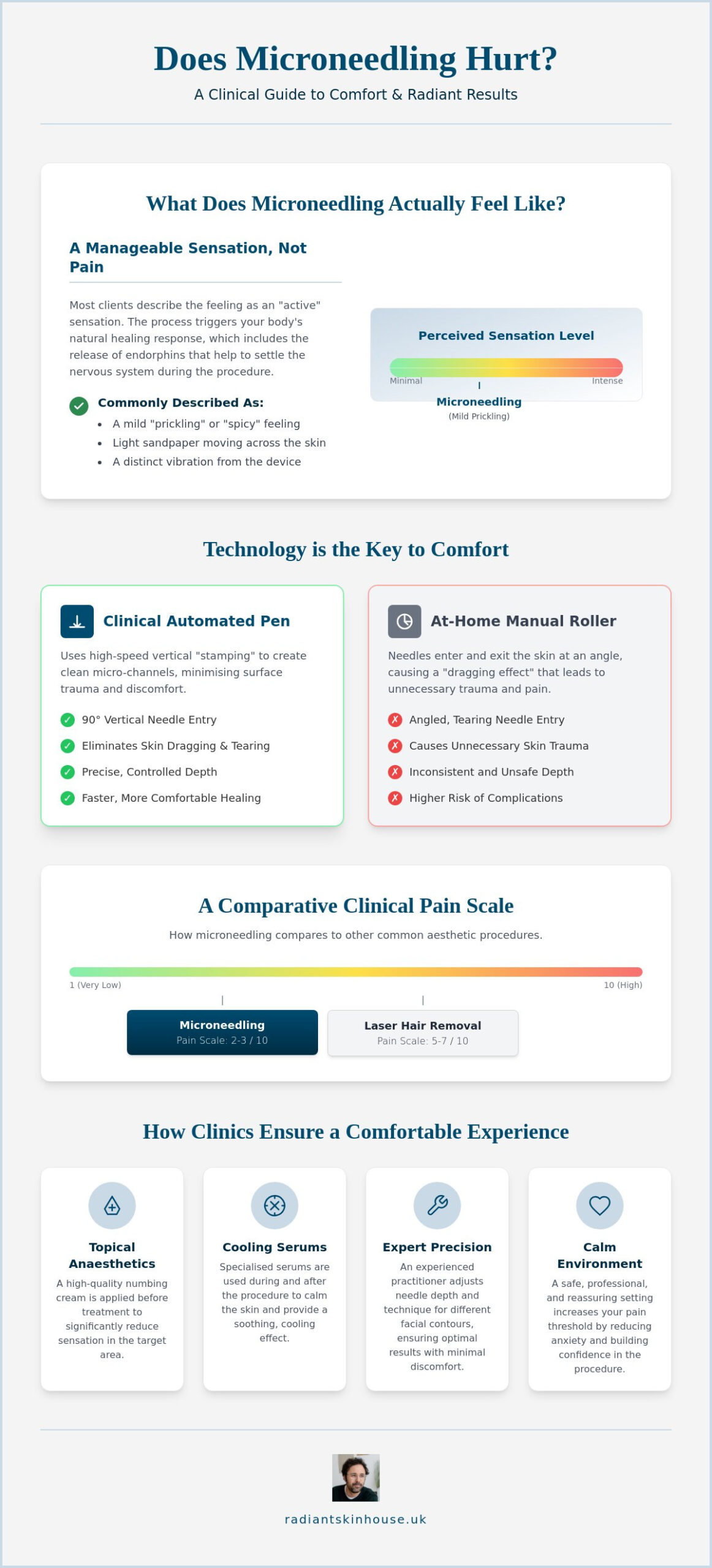
The “pain” associated with this treatment is largely a myth. Most of our clients describe the feeling as a “spicy” or “prickling” sensation that is entirely manageable. While we use the term “micro-injury,” it’s important to view this as a clinical benefit rather than a threat. These tiny punctures trigger your body’s natural healing response, which includes the release of growth factors and endorphins. This biological surge doesn’t just repair the skin; it actually helps to settle the nervous system during the procedure.
To better understand how this process works and why it has become such a staple in modern skincare, watch this helpful video:
What Does Microneedling Feel Like?
Imagine the sensation of light sandpaper being moved across your skin. It’s an “active” sensation, but it’s rarely described as sharp pain. Modern, automated devices use high-speed vertical pulsations that create a distinct vibration. This vibration acts as a clever distraction for your nerves, much like how rubbing a bumped elbow can lessen the immediate ache. You’ll feel the device moving over different contours of your face, but the precision of the needles ensures they enter and exit the skin so quickly that your brain perceives pressure rather than a sting.
The Importance of Clinical Context
Your environment plays a massive role in how you perceive physical discomfort. A cold, sterile atmosphere can heighten anxiety, which naturally makes your body more sensitive to touch. Choosing a professional setting for microneedling london ensures you’re in a space designed for calm confidence. When you feel safe and understood by an expert practitioner in North London, your pain threshold naturally increases. This psychological link is why bespoke clinical care is always preferred over unpredictable at-home attempts. We focus on transparency, so you’ll always know exactly what to expect at every stage of your radiant skin journey.
The Science of Skin Comfort: Technology, Depth, and Device Precision
The comfort of your treatment is largely dictated by the precision of the technology used. If you have ever wondered, does microneedling hurt, the answer often depends on whether your practitioner is using an automated pen or an outdated manual roller. Modern, medical-grade pens are a world away from the hand-held dermal rollers often found in at-home kits. These rollers work by moving needles across the skin in a circular motion, which creates a “dragging effect.” This causes needles to enter and exit the tissue at an angle, leading to unnecessary surface tearing and trauma. Clinical-grade automated pens, however, utilise high-speed oscillation to ensure needles move vertically. This rapid, “stamping” motion significantly reduces the time each needle spends in the skin, minimising the stimulus reaching your nerve endings.
Vertical Stamping vs. Manual Rolling
A 90-degree needle entry is the gold standard for clinical comfort. By entering the skin perfectly straight, our professional devices create clean, microscopic channels without the jagged edges associated with rolling. This lack of surface tearing means you will experience far less stinging during the procedure and a much faster healing process afterwards. Whilst at-home rollers often use duller, thicker needles that can catch on the skin, professional pens use ultra-fine, bespoke needle cartridges that glide effortlessly across the treatment area. This precision is exactly why the question of does microneedling hurt is rarely a concern for our regular clients.
Customising Depth for Comfort
One of the most significant advantages of professional technology is the ability to adjust needle depth in real-time. Your face is not a uniform surface; the skin around your eyes is significantly thinner and more sensitive than the skin on your cheeks or forehead. Our practitioners expertly “map” your face during the session, reducing the depth for delicate areas to ensure you remain comfortable throughout. This tailored approach, combined with the application of a high-quality topical anesthetic cream, transforms the experience from a perceived ordeal into a controlled, refreshing ritual.
The relationship between needle gauge and comfort is also vital. We use the finest possible needles to achieve the desired clinical result, ensuring the “prickle” factor is kept to an absolute minimum. If you are looking for a treatment that respects your skin’s integrity while delivering visible results, exploring the bespoke options at Radiant Skin House is an excellent place to start. This level of technical precision ensures that your journey to smoother skin is as effortless as the final outcome.
A Comparative Pain Scale: Microneedling vs Other Aesthetic Procedures
To understand the reality of the treatment, it helps to place it on a clinical spectrum. If we use a scale of 1 to 10, where 1 represents a light touch and 10 is significant distress, professional microneedling typically sits comfortably between a 2 and a 3. This is largely because the application of high-grade topical anaesthetics dulls the surface nerves before we begin. When people ask, does microneedling hurt, it’s useful to compare it to the quick, sharp “pinch” of Botox injections or the rhythmic, hot “snap” of Laser Hair Removal. Whilst those treatments involve brief moments of intensity, microneedling is more of a consistent, vibrating pressure that feels significantly less invasive than a deep chemical peel.
Following the session, you’ll likely experience what we call the “sunburn sensation.” For the first 24 hours, your skin may feel warm and look slightly flushed, similar to a day spent in the British summer sun without quite enough protection. This is a natural part of the inflammatory response that triggers collagen production. Unlike more aggressive resurfacing treatments that might leave the skin feeling raw for a week, this manageable tightness usually subsides within a few hours, leaving you with a refreshed, radiant glow.
Facial Pain Zones: Where Will You Feel It Most?
The sensation isn’t uniform across the entire face, as different areas have varying levels of sensitivity and tissue depth. Our practitioners tailor the treatment to account for these “zones” to maintain your comfort:
- The Forehead: This area is often “vibration-heavy.” Because the skin is thinner over the bone, you’ll feel the device’s movement more clearly, but it remains a sensation of pressure rather than sharp pain.
- The Cheeks and Fleshy Areas: These are generally the most comfortable zones. The deeper tissue provides a natural cushion that makes the process feel like a firm, exfoliating massage.
- The Upper Lip and Nose: We often refer to these as the “spicy” spots. These areas have a higher density of nerve endings, so you might feel a more pronounced prickle here, though the sensation lasts only for the few seconds the area is being treated.
Duration of Discomfort
One of the most reassuring aspects of the procedure is that any active sensation lasts only as long as the device is in contact with your skin. There is no lingering “ache” once the pen is switched off. You’ll feel a sense of tightness and warmth for the remainder of the day, but this is a far cry from the lengthy, often painful recovery times associated with invasive surgical procedures. Most clients find they can return to their normal routine almost immediately, provided they follow our bespoke aftercare advice to keep the skin hydrated and protected. This efficiency makes it an ideal choice for those who value both results and their personal time.
Professional Pain Management: How Clinics Ensure a Comfortable Experience
A truly professional treatment is defined by the balance between clinical efficacy and patient comfort. While we have already explored the technical precision of modern devices, the actual answer to does microneedling hurt in a clinical setting is heavily influenced by the pain management protocols we employ. We don’t believe in a “one-size-fits-all” approach to skin health. Instead, we utilise a bespoke strategy that anticipates your skin’s sensitivity and manages the sensation before the first needle even touches the surface. This transition from a medical procedure to a refined experience is what sets a leading clinic apart.
The Numbing Process
Every session begins with a dedicated preparation period, typically lasting between 20 and 30 minutes. During this time, we apply a high-strength, medical-grade topical anaesthetic to the treatment area. This cream is expertly chosen to dull the surface nerve endings, ensuring that your perception of the treatment shifts from “feeling everything” to merely “feeling pressure.” If the anaesthetic is allowed to settle correctly, then the subsequent procedure becomes a series of manageable vibrations rather than a sharp or distressing event. This thoughtful preparation is a cornerstone of the radiance london protocol, ensuring you remain in a state of calm confidence throughout your visit.
Aftercare and “Calming the Fire”
The management of comfort does not end when the device is switched off. Immediately following the session, we focus on hydrating and refreshing the skin to soothe any lingering warmth. We often integrate pure hyaluronic acid and specialised cooling masks that act as a “fire extinguisher” for the initial post-treatment glow. This step is vital for reducing the “sunburn” sensation and kick-starting the natural healing process. To maintain this comfort at home, we recommend a few simple adjustments to your routine:
- Avoid high-heat environments such as saunas, steam rooms, or excessively hot showers for at least 48 hours.
- Prioritise a simple, hydrating skincare routine that avoids active acids or harsh exfoliants whilst the skin is delicate.
- Apply a high-factor, broad-spectrum SPF daily, even if it is cloudy, to protect the newly treated tissue from UV irritation.
By following these methodical steps, you ensure that the path to a radiant complexion remains as pleasant as the results themselves. If you are ready to begin your journey with a team that values your comfort as much as your skin texture, arrange your bespoke microneedling session with our expert practitioners today.
Your Radiant Skin Journey: Why Expertise Matters for Comfort in North London
Choosing to enhance your skin texture is an act of self-care that deserves a supportive, expert environment. Throughout this guide, we have addressed the central question: does microneedling hurt? By now, it should be clear that whilst a minor prickling sensation is part of the process, it is a brief and manageable signal that your skin is beginning its transformation. At Radiant Skin House, we believe that the journey to a glowing complexion should be defined by calm confidence rather than anxiety. If you partner with a clinic that prioritises transparent care, then the minor physical sensations of the treatment become a small, worthwhile investment in your long-term radiance.
Our approach in North London is built on the foundation of a sophisticated clinical specialist who understands that every face tells a different story. We don’t just apply a treatment; we curate a bespoke experience tailored to your specific skin concerns and comfort levels. This methodical attention to detail ensures that the result is never exaggerated, but always natural and refreshing. The slight “spiciness” of the procedure is quickly forgotten when you see the visible reduction in acne scarring and the effortless smoothness that follows.
The Radiant Skin House Difference
We have consciously moved away from the cold, sterile atmosphere of traditional medical settings to embrace a philosophy of high-end hospitality. Our clinic is designed to feel like a retreat, where your well-being is the primary focus from the moment you arrive. We proudly serve a discerning community from Finchley to Hampstead, providing a thoughtful and personal touch that larger, more detached clinics often lack. This commitment to your comfort extends across our entire facial portfolio. If you find yourself curious about advanced needle-based therapies but still feel a lingering hesitation, you might also find our guide on plasma hair regeneration london helpful for understanding how we manage sensation in other areas of clinical care.
Ready to Organise Your Consultation?
The transition from learning about a procedure to experiencing its benefits begins with a simple, honest conversation. We invite you to visit our North London centre to discuss your specific skin goals and any concerns you may have regarding your pain threshold. During a bespoke consultation, we can map out a treatment plan that respects your lifestyle and ensures you feel completely secure before proceeding. We are here to act as your dedicated partner, guiding you toward the luminous, healthy skin you deserve with expert precision. Professional microneedling at Radiant Skin House is designed to be a relaxing, results-driven experience.
Step Into Your Most Radiant Future
Your journey toward a smoother, more radiant complexion doesn’t have to be hindered by the fear of discomfort. We’ve explored how the shift from manual rollers to medical-grade automated technology has redefined the patient experience, ensuring that 90-degree needle entry minimises skin trauma. By combining these advanced tools with bespoke numbing protocols, the question of does microneedling hurt becomes a conversation about manageable, temporary sensations rather than significant pain.
At Radiant Skin House, our expert practitioners have spent over a decade serving North London with a sophisticated, non-surgical approach to rejuvenation. We prioritise your comfort as much as your results, ensuring every session feels like a refined step toward your best skin. If you’re ready to experience the benefits of professional care in a warm, welcoming environment, we’re here to guide you as a dedicated partner in your skincare journey.
Book your bespoke microneedling consultation at Radiant Skin House and discover how effortless achieving your skin goals can truly be.
Frequently Asked Questions
Is microneedling more painful than Botox?
Most clients find microneedling to be less intense than the sharp, localised pinch of Botox. While Botox involves a deeper intramuscular injection, microneedling is a surface-level treatment that feels like a consistent, vibrating prickle. The rhythmic vibration of our clinical pens often acts as a sensory distraction, making the experience feel more like a firm exfoliation than a traditional needle injection.
Can I go back to work immediately after my session?
You can certainly return to work, though your skin will likely appear flushed for the remainder of the day. This pinkish hue is similar to a mild sunburn and usually peaks in the first few hours following treatment. If your role is public-facing or involves high-heat environments, you might prefer to schedule your session for a late afternoon to allow the initial redness to settle overnight.
Will I bleed during the microneedling treatment?
Pinpoint bleeding is a normal and expected part of the clinical process. These tiny, microscopic droplets are a positive sign that the needles have reached the precise depth required to trigger your body’s natural healing response. Our practitioners manage this instantly with sterile gauze and hydrating serums, so you won’t leave the clinic with any active bleeding or visible wounds.
How many days does the “sunburn” feeling last?
The “sunburn” sensation typically lasts between 24 and 48 hours. During the first day, your skin might feel warm and slightly tight, as if you’ve spent a day in the sun without enough protection. By the second day, this heat usually dissipates, often followed by a period of light dryness or flaking as the skin begins its natural renewal and rejuvenation process.
Is it safe to use a numbing cream at home before my appointment?
We strongly advise against applying your own numbing cream before arriving at the clinic. To ensure your safety and the efficacy of the treatment, we use specific medical-grade anaesthetics applied in a controlled clinical environment. This allows us to monitor your skin’s reaction and ensure the cream is applied evenly at the correct concentration for your bespoke session.
What happens if the treatment feels too painful during the session?
We encourage open, transparent communication and can adjust the device settings at any moment. If you feel any distress, your practitioner can immediately lower the needle depth or slow the oscillation speed to match your comfort level. Our priority is to maintain your calm confidence, ensuring the treatment remains a positive and results-driven experience rather than an ordeal.
Does the needle depth change how much it hurts?
Yes, deeper needle settings can increase the intensity of the sensation, though the answer to does microneedling hurt depends largely on the area being treated. Fleshy areas like the cheeks can handle deeper settings with ease, whilst thinner skin on the forehead requires a shallower, more delicate approach. Our expert practitioners tailor the depth across different zones of your face to balance comfort with clinical results.
Can I take ibuprofen or aspirin before my microneedling appointment?
You should avoid ibuprofen and aspirin for at least 48 hours before your session. These medications are known blood thinners and can increase the likelihood of bruising or more pronounced pinpoint bleeding during the procedure. If you require pain relief, paracetamol is a safer alternative, but it’s always best to discuss any regular medications with us during your initial consultation.