The Complete Guide to Laser Hair Removal in London (2026)
How does laser hair removal actually work? How many sessions do you need? Does it work on dark skin? What's the real cost? Our comprehensive guide answers every question — honestly.
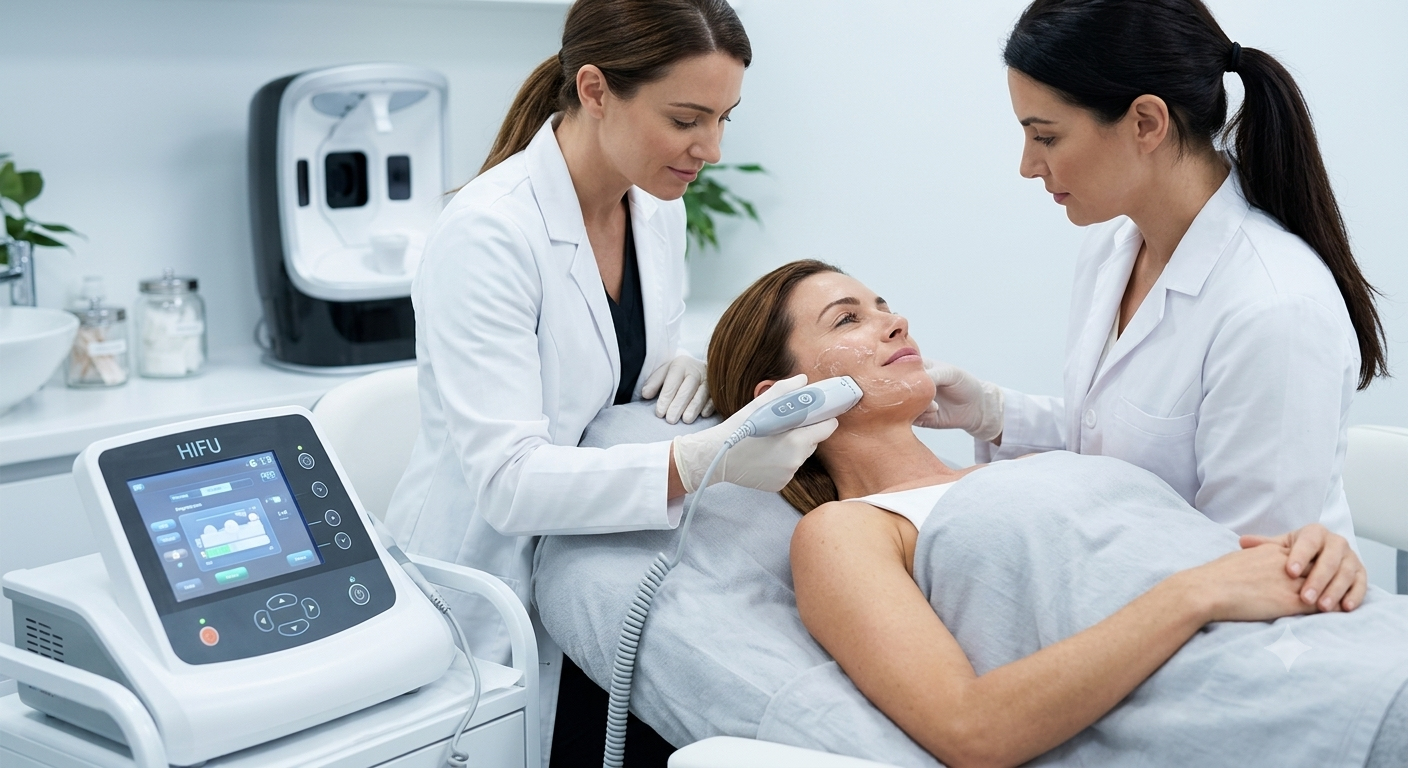
Laser hair removal is one of the most commonly requested aesthetic treatments in London — and one of the most misunderstood. This guide covers everything you need to know before booking your first session: how the technology works, who it’s suitable for, what realistic results look like, and what it actually costs.
How does laser hair removal work?
Laser hair removal uses a principle called selective photothermolysis. A laser emits a specific wavelength of light that is absorbed by melanin — the pigment in your hair. The absorbed light converts to heat, which damages the hair follicle and inhibits its ability to produce future hair growth.
The key word is “selective.” A well-calibrated medical-grade laser targets the melanin in the hair follicle specifically, leaving the surrounding skin largely unaffected. This selectivity is what makes laser both safe and effective — when performed by a trained practitioner with the right equipment.
Why do you need multiple sessions?
Hair grows in cycles. At any given time, only around 20–30% of your hairs are in the active growth phase (anagen) — the phase in which laser is effective. The remaining hairs are in the transitional (catagen) or resting (telogen) phases, where the connection between the hair shaft and the follicle is weaker and laser energy is less effective.
This is why a course of 6–8 sessions, spaced 4–8 weeks apart, is needed. Each session targets a new cohort of follicles that have entered the active growth phase since your last session. By the end of a full course, the vast majority of follicles in the treatment area will have been targeted during their active phase.
Does laser hair removal work on all skin types?
Modern medical-grade laser systems can treat all six Fitzpatrick skin types safely and effectively — but the technology used must match the skin tone.
For fair to medium skin tones (Fitzpatrick I–III), standard wavelengths (755nm, 810nm) work well. For darker skin tones (Fitzpatrick IV–VI), the Nd:YAG 1064nm wavelength is required. This longer wavelength penetrates deeper while reducing surface absorption, allowing the laser to target the follicle without dangerous levels of energy being absorbed by the skin’s surface melanin.
At Radiant Skin House, we use medical-grade systems with multiple wavelength options, and every client receives a thorough skin type assessment and patch test before their first session. Practitioners of South Asian, Indian, African, Afro-Caribbean, and Middle Eastern heritage — all very common in North London — are routinely and safely treated at our Finchley clinic.
Does it work on blonde, red, or grey hair?
This is where honesty matters. Laser targets melanin in the hair. Very light blonde, white, and grey hair contains little or no melanin, which means laser energy is not absorbed effectively. The result is minimal reduction.
Red hair contains pheomelanin rather than eumelanin, which absorbs laser energy less efficiently. Results for red hair are variable — some clients with darker red hair achieve useful reduction, but it is rarely as complete as for dark hair. At Radiant Skin House we will always assess your hair colour at consultation and tell you honestly whether laser is likely to deliver meaningful results for you.
How many sessions will I need?
For most body areas with dark hair, 6–8 sessions achieves 80–90% permanent reduction. There are several factors that influence the number of sessions needed:
Hair colour and coarseness — dark, coarse hair responds most strongly. Fine, lighter hair may need more sessions.
Skin and hair contrast — the greater the contrast between hair colour and skin tone, the more efficiently the laser can target the follicle.
Treatment area — facial hair, particularly on the upper lip and chin in women, often requires more sessions due to hormonal stimulation of new follicles.
Hormonal conditions — PCOS and other hormonal conditions cause ongoing stimulation of new hair follicles. Clients with PCOS typically need more sessions and ongoing maintenance.
Body area — coarser body hair (back, chest, legs) often responds more completely in fewer sessions than fine facial hair.
What does laser hair removal actually cost in London?
Prices vary significantly across London clinics — and price is not always a reliable indicator of quality. What matters is the type of laser equipment, the training of the practitioner, and whether a proper consultation and patch test are included.
At Radiant Skin House in Finchley, our prices start from £40 per session for small areas (upper lip, chin). Underarms start from £60, bikini from £80, full legs from £120, and back or chest (men) from £100. A pre-paid course of 6 sessions saves 20% on any area.
When you calculate the lifetime cost of waxing — £40–60 per session, 10–12 times per year, for 10 years — a laser course represents significant long-term savings, in addition to eliminating the ongoing time and inconvenience.
Is laser hair removal permanent?
Laser achieves long-lasting reduction rather than guaranteed permanent removal. After a full course of 6–8 sessions, most clients achieve 80–90% permanent reduction. Some hair may return over several years, particularly in hormonally driven areas (chin, upper lip, bikini line), as hormonal changes can stimulate previously dormant follicles. Occasional maintenance sessions every 1–2 years are recommended for these areas to maintain the result. For most body areas, the reduction is effectively permanent.
Does it hurt?
The sensation depends on the area being treated, your skin type, and the laser settings. Most clients describe a quick snap or flick — similar to a light elastic band. Modern laser systems are significantly more comfortable than the technology available 5–10 years ago. Sensitive areas — the upper lip, bikini line — feel slightly more intense. Most clients find the treatment very manageable, and practitioners can adjust settings if needed.
What to look for in a laser hair removal clinic in London
When choosing a clinic for laser hair removal, there are several questions worth asking:
What laser technology do they use, and what wavelengths are available? (Nd:YAG 1064nm is essential for darker skin tones.)
Is a patch test included before the first session?
Who performs the treatments — a qualified laser practitioner, or untrained staff?
Are realistic expectations discussed at consultation, or just promised results?
Are course packages available, and what are the terms if you need to pause?
At Radiant Skin House in Finchley, North London, we include a free consultation and patch test for every new client. Our practitioners are trained and qualified in laser treatment, and we will always give you an honest assessment of what results are achievable for your specific skin and hair type.
Ready to start your laser hair removal journey? Book a free consultation at our Finchley clinic — one minute from Finchley Central Tube on the Northern Line, with easy on-street parking.

