Plasma Treatment for Skin Tightening: A Complete Guide
Plasma therapy is one of the most versatile non-invasive treatments available — capable of tightening, resurfacing, lifting and even stimulating hair growth. Here's everything you need to know.
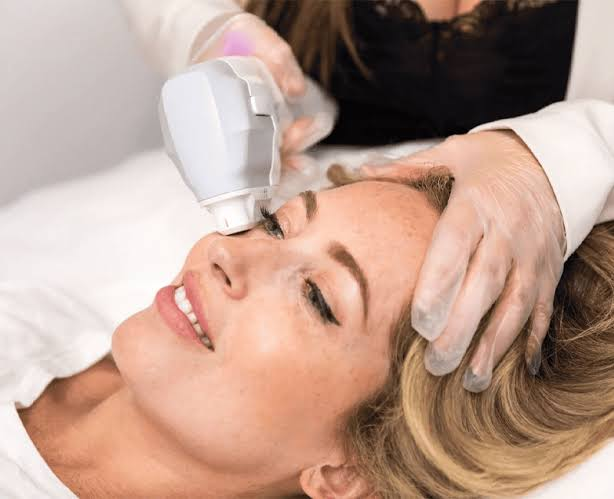
Plasma therapy has transformed what’s possible with non-invasive skin treatment. At Radiant Skin House, we use three distinct plasma modalities — cold, warm and hot — allowing us to address a wide range of concerns with precision and care.
What is plasma therapy?
Plasma is the fourth state of matter — created when gas is ionised, producing a high-energy stream that interacts with the skin’s surface and underlying tissue. Different plasma temperatures produce different biological responses, which is why the modality needs to be carefully matched to the concern being treated.
Cold Plasma
Cold plasma operates at lower temperatures, making it ideal for sensitive skin and scalp treatments. It stimulates cellular activity and circulation without causing thermal damage, and is highly effective for Fusion Plasma Hair — a non-invasive treatment that stimulates dormant hair follicles and supports hair regrowth without needles or injections.
Warm Plasma
Warm plasma works on the face and neck to tighten, firm and resurface the skin. It’s an excellent choice for clients who want visible improvement in skin texture, fine lines and mild laxity but aren’t ready for the more intensive results of hot plasma. Recovery is minimal.
Hot Plasma (Plasma Fibroblast)
Hot plasma delivers the most dramatic results and is used for pronounced skin laxity, deep wrinkles, and targeted lifting — including eyelid tightening (a popular alternative to blepharoplasty). It creates controlled micro-injuries that stimulate intense fibroblast activity and collagen remodelling. Results can be comparable to surgical procedures at a fraction of the cost and without the surgical risk.
There is some downtime with hot plasma — small carbon crusts form on the skin for 5–7 days as part of the healing process. Most clients take a week away from social events.
Skin Tag & Blemish Removal
Plasma is also used for precise removal of skin tags, milia, sebaceous cysts, syringoma and other benign blemishes. The plasma energy targets the lesion directly, removing it cleanly with no cutting or stitching required.
Is plasma right for me?
Plasma suits a wide range of clients and concerns. The most important factor is choosing the right modality for your skin type and concern — which is something our practitioners assess carefully at consultation. Plasma is not suitable during pregnancy, for clients on certain medications, or for very dark skin tones (where hot plasma carries a higher risk of hyperpigmentation).
If you’d like to explore plasma treatment at Radiant Skin House in Finchley, book a consultation with Natasha who specialises in all three plasma modalities.