PCOS laser treatment · Finchley, North London

Laser Hair Removal for PCOS in North London.

Laser can significantly reduce PCOS-related hair growth. We approach PCOS clients with complete honesty — about how many sessions you will need, what results are realistic, and the best long-term strategy for your situation.

Understanding PCOS and hair growth

Why PCOS causes excess hair — and what laser can genuinely achieve.

Fungal nail infection — medically known as onychomycosis Polycystic ovary syndrome (PCOS) affects around 1 in 10 women of reproductive age, and elevated androgens — male hormones — are one of its most common features. These androgens, particularly testosterone and its derivatives, stimulate hair follicles to produce coarser, darker hair in areas typically associated with male hair growth patterns. This is called hirsutism, and it affects up to 70% of women with PCOS to some degree.

The most commonly affected areas are the face and chin, upper lip, neck and jawline, chest, abdomen, and back. For many women, PCOS-related hair growth is a significant source of daily distress — requiring time-consuming, often painful daily removal and creating chronic anxiety about appearance, intimacy, and social situations. Waxing, shaving, threading, and depilatory creams provide temporary results but do nothing to the underlying follicle. They are effective for the short term but require indefinite ongoing effort with no prospect of permanent change. Laser is fundamentally different: it destroys the hair follicle itself, producing permanent reduction in the follicles it treats.

The important nuance with PCOS is that the hormonal stimulation is ongoing — not a one-time event. While laser significantly reduces the follicles it treats, the underlying hormonal environment can continue to activate previously dormant follicles over time. This means PCOS laser treatment typically requires more sessions than non-hormonal hair, and maintenance sessions are usually needed periodically to address any new growth.

However, even with this maintenance requirement, the results for most PCOS clients are dramatic. The total volume of actively growing hair is reduced by 70–85% after a full course, and the amount of daily management required drops dramatically. Most clients describe this as life-changing — even knowing they will need occasional top-ups.— commonly affects the toenails, though fingernails can also be affected. Thickened, discoloured or crumbling toenails can be difficult to manage and may make you feel uncomfortable wearing open shoes. Not every damaged or discoloured nail is fungal. Similar changes can be caused by injury, psoriasis, and other nail conditions. We do not provide a medical diagnosis — testing by a pharmacist, podiatrist or GP may be recommended before treatment begins.
Our approach to PCOS clients

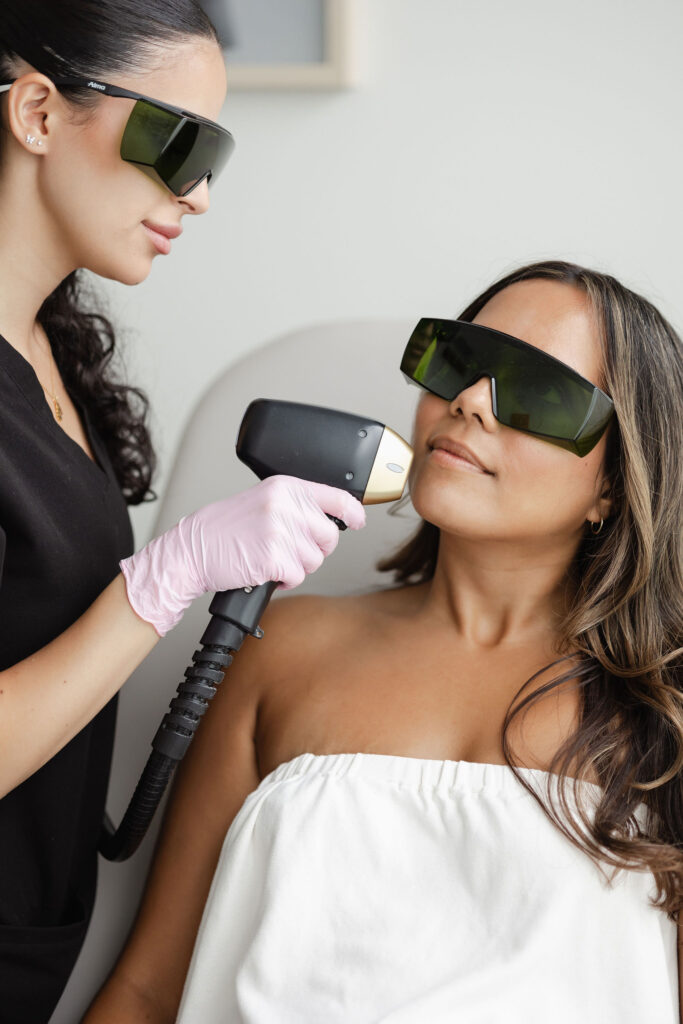
We are completely transparent about what laser can and cannot achieve for PCOS hair growth. At your consultation, we will discuss:


  • Realistic session count for your specific areas — usually 8–12+
  • Whether your PCOS is medically managed and how this affects results
  • Which areas respond best vs those requiring more ongoing maintenance
  • A long-term maintenance plan that works for your lifestyle
Medical management and laser results
Women whose PCOS is medically managed — for example with the oral contraceptive pill, spironolactone, or other anti-androgen medications — typically see better laser results and require fewer maintenance sessions than unmanaged cases. This is because medication reduces the ongoing hormonal stimulation of new follicles.

If you are not currently receiving treatment for PCOS, we recommend discussing laser alongside GP or specialist care. Laser and medical management work well together — the combination produces the best long-term outcome.
Treatment areas

Areas affected by PCOS hair growth — and how laser treats each.
PCOS affects different women differently. Below is a guide to the most common areas and what to expect from laser treatment in each.

Face & chin

The most common site of PCOS hirsutism. Laser effectively treats coarse, dark facial hair — often producing a life-changing reduction in what many clients describe as their biggest daily source of distress.

Sessions

Typically 8–12+

Maintenance

Usually required

Upper lip

Fine or coarse hair above the lip that requires daily shaving or waxing in many PCOS clients. Laser treats this precisely and permanently reduces regrowth significantly.

Sessions

Typically 8–10

Maintenance

Usually required

Neck & jawline

Coarse, dark hair extending down the neck and along the jaw. Common in PCOS and often causing significant self-consciousness. Responds well to laser with consistent improvement across sessions.

Sessions

Typically 8–12

Maintenance

Usually required

Chest & abdomen

Central chest hair and stomach line — androgenic hair growth common in moderate to severe PCOS. Responds well to laser. Body hair is typically easier to manage long-term than facial hair.

Sessions

Typically 6–10

Maintenance

Sometimes required

Back & shoulders

Upper and lower back hair from androgenic stimulation. Responds well to laser. Body hair typically requires fewer maintenance sessions than hormonal facial areas.

Sessions

Typically 6–8

Maintenance

Occasional

Inner thighs & bikini

Increased hair density and coarseness in the intimate area and inner thighs. Responds effectively to laser. Also eliminates the ingrown hairs and folliculitis that are common in PCOS clients who wax or shave these areas.

Sessions

Typically 6–10

Maintenance

Sometimes required
Your results journey

What PCOS clients typically experience.

Sessions 1–4

Significant active hair reduction

Meaningful reduction in existing active hair. Shedding begins 2–3 weeks after each session. Most clients see 40–60% improvement in density and a clear change in how often they need to remove hair. Daily shaving and waxing frequency drops noticeably. The overall burden of hair management begins to lift.

Sessions 5–8+

Dramatic transformation

70–80% reduction of existing stimulated follicles. Daily shaving or waxing needs reduce dramatically or disappear entirely. Some new follicle activation from ongoing hormonal stimulation may mean occasional new hairs appear — these are addressed in subsequent sessions. Most PCOS clients describe this stage as genuinely life-changing.
Ongoing maintenance

Long-term management

Because PCOS continues to stimulate new follicles, periodic maintenance sessions are usually needed — typically every 6–12 months depending on hormonal control and medical management. The overall level of hair growth remains dramatically reduced compared to pre-treatment. Most clients find the maintenance burden is a fraction of what daily shaving or waxing required.

Client results

What PCOS clients say about laser at Radiant Skin House.

Work is exceptional, and it's clear that you put a great deal of effort and thought into every aspect of it. Attention to detail is.

Stefanie Rashford
It Developer

Service was exceptional, and it's clear that you have a genuine passion for what you do. The attention to detail and willingness to personalize the.

Patric Stone
Consultant

The work done was outstanding! The dedication and hard work put into it were evident and greatly appreciated. The level of skill and expertise demonstrated.

Hugo James
Manger

The product delivered exceeded expectations! The attention to detail and commitment to quality were evident in every aspect. The level of customer service provided was.

Cassie Carleton
CEO

Lorem ipsum dolor sit amet, consectetur adipiscing elit. Nullam facilisis at turpis eu faucibus. In dignissim, enim eu ornare aliquet, metus ex tempor neque, sit.

Coby Sue
FAQ

PCOS laser hair removal — your questions answered.

Everything you need to know before booking your first session in Finchley.
Yes — laser hair removal can significantly reduce PCOS-related hair growth. Because PCOS causes elevated androgens (male hormones) that stimulate hair follicles, laser is one of the most effective treatments available for managing hirsutism. It permanently destroys the follicles that have already been activated, reducing the amount of actively growing hair substantially. The key caveat is that PCOS involves ongoing hormonal stimulation, meaning new follicles can be activated over time — particularly if PCOS is not medically managed.
More than the typical 6–8. Most PCOS clients need 8–12 sessions, and some require more depending on the severity of hirsutism and how well their PCOS is controlled. Maintenance sessions every 6–12 months are usually required long-term to address any new follicle activation. We give honest, individual estimates at consultation — we never promise a specific number without assessing you in person.
We need to be honest about this: laser will not permanently cure PCOS hair growth in the same way it can for non-hormonal hair. Because PCOS involves ongoing hormonal stimulation of new follicles, some hair may continue to grow or return over time. However, laser dramatically reduces the volume and density of hair in treated areas — and for most clients, the improvement is life-changing. Maintenance sessions help sustain results long term.
If you are not yet diagnosed or treated for PCOS, we recommend seeing your GP or endocrinologist before or alongside starting laser treatment. Medical management of PCOS (such as oral contraceptives or anti-androgen medication) reduces ongoing hormonal stimulation of hair follicles, which improves laser results and reduces the frequency of maintenance needed. We will discuss this at your consultation — but laser can begin regardless of medication status.
Yes. The face — particularly the chin, jaw, and upper lip — is the most commonly affected area for PCOS hirsutism, and laser treats these areas effectively. Facial hair is hormonally driven and may require more sessions than body hair, with periodic maintenance sessions due to ongoing androgen stimulation. Results are typically very significant even with maintenance needs.
Yes — particularly for clients who wax or shave PCOS-related facial or body hair. Coarse, hormonally-driven hair frequently causes ingrown hairs and folliculitis when shaved or waxed. Laser permanently destroys the follicle, eliminating the root cause of ingrown hairs in treated areas. This benefit alone is significant for many PCOS clients who have suffered chronic folliculitis.
The most common areas are: the face and chin (most common), upper lip, neck and jawline, sideburns, chest and stomach line, back, inner thighs, and the intimate area. Some women experience hair growth across all these areas; others are primarily affected in one or two. We will assess all areas at your consultation and prioritise based on your specific concern and distress level.
Pricing is the same as for standard laser treatments — from £40 per session for small facial areas, £60 for underarms, £80 for bikini line. Because PCOS typically requires more sessions, many clients find pre-paid courses of 6 (saving 20%) the best value, as they commit to the course needed for meaningful results. Full pricing is confirmed at your free consultation.
Yes. Modern Nd:YAG (1064nm) lasers are specifically designed for darker skin tones (Fitzpatrick Types IV–VI). The longer wavelength bypasses the skin’s surface melanin and targets the follicle safely. We assess every client individually at consultation and patch test.
Absolutely. Laser is increasingly popular with men for back, chest, shoulders, and beard shaping. Treatment is the same as for women — a consultation, patch test, and then a course of 6–8 sessions. Male facial hair typically needs more sessions due to its density.
Laser can significantly reduce PCOS-related hair growth. Because PCOS involves ongoing hormonal stimulation, you may need more sessions than average and occasional maintenance sessions long-term. We advise on realistic expectations honestly at every consultation.